
What Is Specially Designed Instruction In Special Education? A Complete Guide
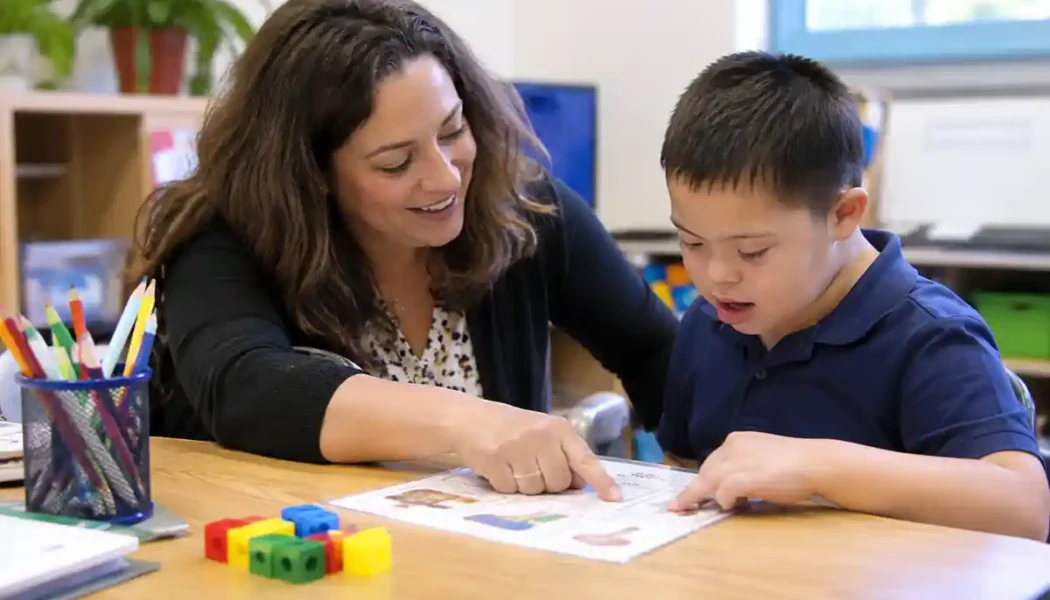
Specially designed instruction (SDI) is an individualized education program that’s provided to a student with a disability. It adapts the study content, methodology, and instructional delivery to suit the needs of a child eligible under the Individuals with Disabilities Education Act (IDEA).
In this guide, you will learn what Specially Designed Instruction (SDI) is; how SDI differs from accommodations and modifications; and examples of SDI in reading, writing, and math.
What Is Specially Designed Instruction (SDI) Under The IDEA?
Specially Designed Instruction (SDI) under the Individuals with Disabilities Education Act (IDEA) refers to adapting the content, methodology, and delivery of instruction based on the individual needs of a disabled student, ensuring access to the general education curriculum so that the child can meet the educational standards.
SDI adapts what is taught, how it is taught, or how the educational material is delivered to meet a student’s disability-related needs. Under IDEA, special education must be provided at no cost to parents, and it can be offered in the classroom, home, hospital, institution, or other settings; it also includes physical education.
Here’s how SDI changes formal curriculum to suit the unique needs of students with disabilities:
Content: Changes to teaching foundational reading, math, communication, social, or functional skills that the student needs before accessing grade-level study material.
Methodology: Using explicit, systematic instruction, visual support, task analysis, repeated practice, or an evidence-based approach to teaching.
Delivery: Provides one-on-one instruction, in small groups, at a different pace from that of normal students, or in a particular setting.
Specially Designed Instruction vs Accommodations vs Modifications
By definition, SDI is adapting the content, methodology, or delivery of instruction to address a child’s unique disability-related learning needs and ensure access to the general curriculum. Accommodations reduce the entry barrier caused by the disability by changing presentation, response format, setting, or schedule, but maintain the same academic performance standard. Modifications alter the standard itself, such as the instructional levels, content, or performance criteria, especially when the student’s performance is substantially below grade level.
Let’s take a look at the core differences between SDI, accommodations, and modifications:
| Type | What it Changes | Main Purpose | Best Suited For | Example |
| Specially Designed Instruction (SDI) | Content, teaching method, and delivery of instruction | Addresses disability-related needs of the student and helps them make progress in general education | Any student eligible for special education under IDEA who needs individualized instruction because of their disability | Explicit phonics lessons, small group instruction, or systematic instruction in social and emotional skills |
| Accommodations | How the student learns, accesses study material, or demonstrates their knowledge | Access to the same grade-level curriculum and expectations | Students with disabilities who can work toward grade-level expectations but face barriers in accessing study material or demonstrating their knowledge | Extended time, audiobooks, preferential seating, speech-to-text technology, or a quiet testing room |
| Modifications | Curriculum, assignment, or performance expectations | Changes expectations for the student because they were performing below grade-level expectations | Students whose disability needs are so significant that grade-level content, complexity, or performance expectations must be changed | Fewer math problems, simplified reading passage, alternate assignment, or reduced learning standard |
Examples Of SDI in Reading, Writing, And Math
Specially Designed Instruction (SDI) in reading, writing, and math involves individualized teaching practices that target a student’s IEP goals. Special education services adapt the content, teaching methods, or content delivery to address the child’s disability-related needs and help them access the general education curriculum.
Reading:
- Provide explicit, systematic phonics instruction using a structured literacy approach
- Teach sound-letter patterns, blending, and multisyllable-word strategies with guided practice and corrective feedback
- Repeated reading of short passages at the student’s instructional level, with modelling, timed re-readings, and feedback
- Teach comprehension routines such as previewing, identifying the main idea, annotating key details, and summarizing
- Pre-teach key vocabulary with visuals, definitions, examples, and repeated practice before reading a grade-level text
Writing:
- Teach pre-writing strategies, use graphic organizers, model brainstorming, and provide structured prompts before drafting
- Explicitly teach sentence types, use sentence stems, and provide guided practice writing and revising completed sentences
- Use a step-by-step writing framework, with planning, drafting, revision, and editing; model how to organize main ideas, supporting details, and a conclusion
- Teach a revision checklist, model its use, and give specific feedback on capitalization, punctuation, word choice, and organization
- Use multisensory strategies, guided notes, and repeated practice with feedback to turn spoken ideas into written content
Math:
- Use objects, visual models, and step-by-step scaffolding to teach place value, operations, fractions, or computation
- Teach fact strategies and use structured practice, such as cover-copy-compare, with constant monitoring and corrective feedback
- Teach a problem-solving routine, such as reading the math problem multiple times with a different purpose, identifying what is asked, choosing an operation, and checking the answer
- Break problems into smaller steps, use visual supports, teach math vocabulary, and provide worked examples before independent practice
- Use manipulatives, drawings, and concrete-representational-abstract (CRA) instructions so the student moves from hands-on models to symbols
- Teach sentence stems such as “I solved it by…” or “My answer makes sense because…” so the student can explain their reasoning orally or in writing
Conclusion
Specially Designed Instruction (SDI) is the backbone of special education under IDEA, providing tailored content, teaching methodology, and delivery to meet the individual requirements of students’ disability-related needs. Unlike classroom accommodations, which remove access barriers without lowering performance standards, or modifications, which adjust grade-level expectations below the standard, SDI actively teaches students specific skills that are needed to bridge learning gaps.
Across maths, reading, and writing, targeted practices like structured literacy, graphic organizers, and CRA models give students practical pathways to master IEP goals alongside their peers. SDI is not about lowering the bar for students with disabilities; it is about changing what and how they are taught so they have the explicit instruction required to reach grade-level standards.
FAQs
1. What is Specially Designed Instruction (SDI)?
Specially Designed Instruction (SDI) is an individualized education program that adapts the content, method, or delivery of teaching to meet a student’s disability-related needs and help them access and progress in the general academic curriculum.
2. Who can provide Specially Designed Instruction?
SDI must be designed and supervised by a qualified special-education professional. Depending on the IEP and state requirements, general-education teachers, specialists, and other trained staff may deliver parts of it.
3. Where and how often is Specially Designed Instruction (SDI) provided?
SDI can occur in a general classroom, resource room, small group, one-to-one setting, or a hospital. The IEP must specify the frequency, duration, location, and service provider. Teachers should use the least restrictive environment possible for the student.
4. Is an accommodation the same as Specially Designed Instruction?
No, an accommodation changes how a student accesses instruction or demonstrates learning, such as needing extended time, audiobooks, or a quiet testing place, without changing the grade expectations. SDI is individualized teaching that must be linked to IEP goals under the IDEA Act.
5. How do you know Specially Designed Instruction is working?
The IEP team monitors progress toward measurable annual goals using consistent, skill-specific data such as curriculum-based measures, work samples, observations, and rubrics. If the data shows insufficient growth, the team reviews implementation and adjusts the SDI.