
Level 2 Autism Explained: Common Symptoms, Diagnosis, And Support Strategies
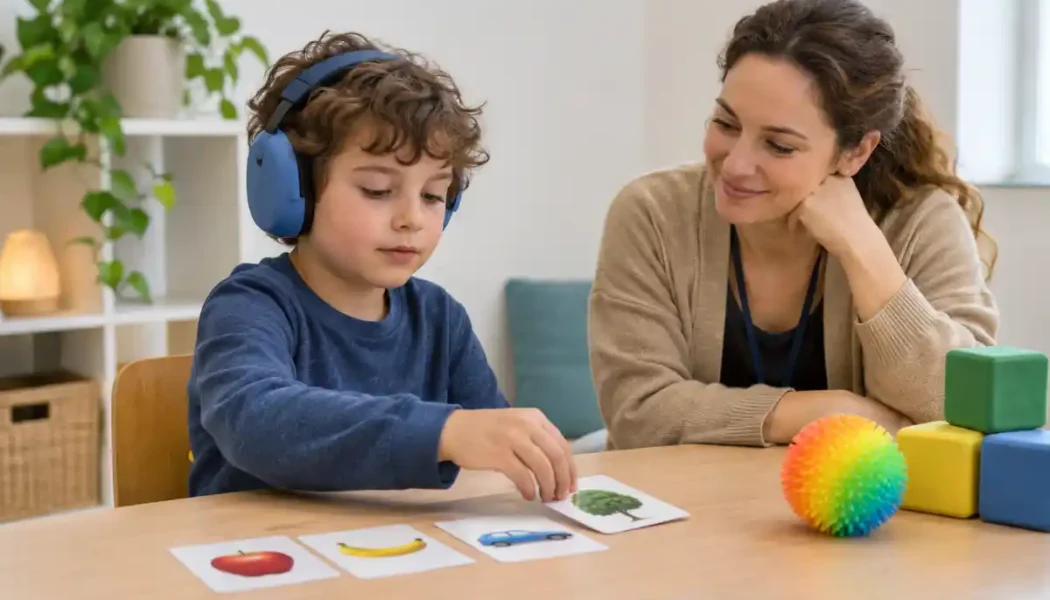
Level 2 autism is one of the three autism severity levels designated by the Diagnostic and Statistical Manual of Mental Disorders (DSM-5), based on how much support is needed for the person in their daily tasks. Level 2 is defined as “requiring substantial support” and sits between Level 1 (“requiring support”) and Level 3 (“requiring very substantial support”). It is a neurodevelopmental disorder that affects how a person communicates and behaves.
Level 2 Autism Symptoms
Difficulty with Communication
Communication is the most visible challenge in children with Level 2 autism, as they have marked deficits in verbal and nonverbal communication skills. They might speak in short or scripted phrases, or use fewer words than other children their age. Initiation of social interactions is often limited, or it may look different from what people expect. During conversations, they might respond in ways that catch people off guard, not respond at all, or even walk away. They also might have a high interest in specific topics.
Struggles with Change
Changes can be very challenging for them. A simple shift in their daily schedule, like a different route home or a substitute teacher, can cause great distress. They may cry and refuse to do anything when things feel different.
Repetitive Behaviors
Repetitive behaviors can appear frequently enough to be obvious to a casual observer and may interfere with daily activities. They can repeat the same movements, like rocking back and forth or lining up their toys in a specific way.
Sensory Sensitivities
They can be sensitive to certain things, and it can be intense. Things like a flickering light, a tag on a shirt, or places like a crowded grocery store can be overwhelming for them. When this overload builds up, it turns into a meltdown or withdrawal, and avoidance of certain situations and places.
Diagnosis For Level 2 Autism
The diagnosis for level 2 autism includes different approaches conducted by healthcare professionals:
- Developmental history: A review of the child’s or adult’s developmental history is obtained from the parents or caregivers.
- Behavioral observation: The healthcare professional observes the person’s behavior in various settings to assess social interaction, communication, and play.
- Standardized assessments: Standardized tests are given to the person to check their cognitive abilities, social skills, language skills, and adaptive behaviors. The scores obtained determine the support level required by the person.
- Review of medical history: Important medical records are checked in order to rule out any other conditions that might explain the observed symptoms.
Level 2 Autism Support Strategies
The purpose of assigning a specific support level is never about how smart someone is or to label someone as high- or low-functioning. It is to clarify what kind of support or intervention is needed by that person. Children or adults with level 2 autism benefit from a combination of approaches personalized to their needs. There isn’t a fixed support package that works for everyone; the right support can differ from person to person. Supports and approaches for level 2 autism include:
- Comprehensive diagnostic assessment: This assessment is done to clarify the person’s challenges, strengths, and support needs.
- Structured therapy: It includes neurodiversity-affirming psychotherapy to support emotional regulation, occupational therapy for sensory regulation, and behavioral supports for rigid routines and flexibility.
- Skills coaching and supports: This includes social support groups with a structured setting, executive functioning supports that help with task management tools, external structure, and adaptive strategies, and accommodations made at school, work, and home, like communication support, predictable schedules, sensory accommodations, and clear expectations.
- Family and caregiver support: Guidance and support are given to family members, caregivers, and support staff to understand what autism is, how to respond appropriately, and build consistency.
- Community and peer support: Allowing connection with others on the same support levels, access to neurodiversity-affirming spaces, and supportive community resources.
Level 2 Autism Treatment And Therapy Options
Treatment for level 2 autism includes:
- Cognitive Behavioral Therapy (CBT): These therapies help the person or child with level 2 autism manage anxiety and frustration and also reduce challenging behaviors. They teach problem-solving skills that can make everyday life easier.
- Dialectical Behavior Therapy (DBT): This therapy is especially useful for people who are easily overwhelmed or frustrated by changes, as it helps in managing strong emotions and developing coping skills. Through DBT, a child or an adult can learn mindfulness and emotional regulation techniques.
- Occupational therapy: Occupational therapy helps a child or an adult handle everyday tasks like getting dressed, using utensils, or sensory issues that can make certain sounds or textures feel overwhelming.
- Eye Movement Desensitization and Reprocessing (EMDR): Some people might have experienced trauma or intense stress due to negative experiences or sensory overload. EMDR helps with processing these experiences safely, which improves overall mental health.
Conclusion
Level 2 autism is a clinical term designated for the severity of autism, which is considered moderate autism in informal terms. Autism is not classified into these three levels in order to measure how capable a person is, but instead to know how much a person needs support. Level 2 autism is defined as requiring substantial support, in which the support system typically includes clinical therapies, assistive tools, a structured environment, and caregiver assistance.
FAQs
1. How serious is level 2 autism?
Level 2 autism is considered as a moderate form of Autism Spectrum Disorder (ASD) which is defined by the Diagnostic and Statistical Manual of Mental Disorders (DSM-5). It is defined as “requiring substantial support”.
2. Can level 2 autism live a normal life?
People with level 2 autism can live a normal life and can even achieve varying degrees of independence. But the journey towards this independence can be complex and would need substantial support.
3. Will level 2 autism get worse with age?
Level 2 autism does not get worse with age, as it is a neurodevelopmental condition, which does not progress as a disease does.
4. Is level 2 autism curable?
Level 2 autism is not curable as it is a lifelong neurodevelopmental condition, but the symptoms can be effectively managed with substantial support and treatment.
5. Can my level 2 autistic child live alone?
Whether a child with level 2 autism can live alone as an adult depends on each individual. Some might live a semi-independent or independent life with the right support, and some might need ongoing support. Early intervention can improve symptoms, but each child is different, so one single answer wouldn’t be applicable to everyone.